How to choose a Phuket area before buying
Phuket may look compact on the map, but choosing property here is not only about distance to the beach. Different parts of the island vary strongly by lifestyle, prices, rental demand, traffic, infrastructure and property type.
The main mistake is searching for the “best area in Phuket” without a clear scenario. The best location for short-term rentals, winter stays, family living, villa ownership or quiet holidays may be completely different. One buyer needs the beach within five minutes, another needs schools and supermarkets, while someone else wants privacy and lower density.
If you are just starting to explore Phuket property, divide the island into clear zones first: the west coast, the south coast and the north coast. This makes it easier to understand where to look for a condo, where villas make more sense, where rental demand is stronger and where long-term living feels more comfortable.
West coast: beaches, rentals and stronger competition
Phuket’s west coast is the most familiar zone for tourists and buyers who want to stay close to the beaches. It includes Bang Tao, Laguna, Layan, Surin, Kamala, Patong, Kata and Karon. Each location has its own character, but the overall pattern is clear: the west coast is strongly associated with beach lifestyle, holidays and rental demand.
Bang Tao, Laguna and Layan form one of the island’s premium clusters. Average prices are higher, and demand is strong among families, lifestyle buyers and investors. The area has restaurants, beach clubs, shops, international schools and higher-end residential projects. If you are looking at property in Bang Tao, keep in mind that it is one of Phuket’s most liquid and expensive markets.
Kamala and Surin suit buyers looking for a calmer beach atmosphere, sea-view properties and more private living. These areas include luxury villas, sea-view apartments and holiday-focused projects. Entry budgets are usually higher, especially for properties with strong views and convenient beach access.
Patong is the island’s most active tourist area. It can work for buyers who understand short-term rental demand, nightlife and dense traffic. It is less often chosen for quiet living, but tourist flow is among the strongest in Phuket.
Kata and Karon are more balanced beach areas. They have holiday demand, family travel, rental potential and a calmer atmosphere than Patong. For condos and apartments, these are clear options when the goal is beach lifestyle and seasonal rentals.
South coast: Rawai, Nai Harn and Chalong for living
Southern Phuket has a different rhythm. It feels less like a classic tourist centre and more like an everyday living area. Rawai, Nai Harn and Chalong are often chosen for winter stays, long-term living, family use and villa ownership.
Rawai is one of the most popular areas among foreigners who live in Phuket long-term. It has cafés, services, shops, villas, smaller residential projects and mid-term rental demand. Rawai Beach is more suitable for walks, boats and seaside restaurants, while nearby Nai Harn, Yanui and other beaches are more common for swimming.
Nai Harn is greener and calmer, close to one of the island’s most attractive beaches. It suits buyers looking for a relaxed lifestyle, nature, walking routes, sport and access to the sea without the density of larger tourist zones.
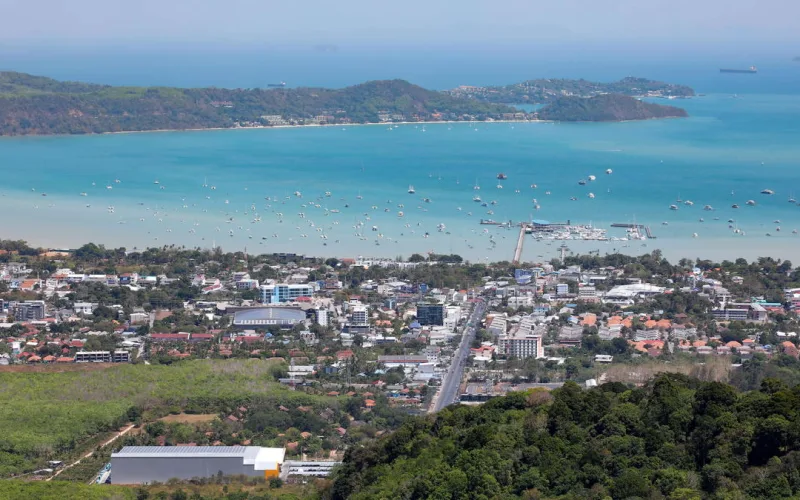
Chalong is a practical living location. It has roads, a marina, schools, shops, gyms and access to different parts of the island. Property buyers often consider Chalong when they want more space for the budget and do not need the beach within walking distance.
If you are comparing villas in Phuket, the south deserves close attention. Rawai, Nai Harn and Chalong usually offer more villa and house options than the classic beach areas on the west coast.
North coast: Nai Yang, Mai Khao and quieter living
Northern Phuket is chosen by buyers who value quiet surroundings, greenery, airport access, national park setting and lower-density development. Key areas include Nai Yang, Mai Khao and the north-western direction around Layan.
Nai Yang is interesting for buyers who want to be close to the beach and the airport without the constant density of the island’s busier tourist centres. The beach sits near Sirinat National Park, and the area feels calmer and greener than many southern and western locations. New condominiums, resort-style projects and holiday condos are appearing here.
Mai Khao is even quieter and more spacious. It suits private holidays, large resorts, villas and buyers who prefer distance from dense urban areas. For daily life without a car, Mai Khao can be less convenient, but it offers space, privacy and a resort-like environment.
The north coast works well for buyers who fly to Phuket often, want quick airport access, prefer quiet surroundings and do not need dense urban infrastructure every day. Rental demand exists here, but it is more niche than in Bang Tao, Patong, Kata or Karon.
Where to look for condos and where villas make more sense
In Phuket, property type is closely tied to the area. Condos are more common in locations with stronger infrastructure, beach demand and a larger supply of residential projects. Villas are more common where there is more land, privacy and long-term living demand.
If you are looking for condos in Phuket, consider Bang Tao, Nai Yang, Kamala, Kata, Karon, Rawai, Kathu and Phuket Town. These areas offer studios, 1–2 bedroom units, completed buildings and new projects with payment plans.
If your goal is a villa, look at Rawai, Nai Harn, Chalong, Cherng Talay, Bang Tao, Layan, Thalang and Mai Khao. Buying a villa in Phuket requires more careful checks: land, ownership structure, pool service, garden care, management, running costs and rental rules all matter.
For buyers with a lower starting budget, a condo may be a more practical entry point. For example, condos in Phuket under ฿5M can be a first step into the market. Villas usually require a higher budget, especially when a pool, land and strong location are required.
Which areas work better for rentals
For rentals, the strongest areas usually combine three things: clear location, tourist or long-term demand and convenient infrastructure around the property.
For short-term rentals, the west coast is stronger: Patong, Kata, Karon, Bang Tao and Kamala. These areas have tourist flow, stronger name recognition and a clearer reason for guests to pay a higher nightly rate. Competition is also higher, so project quality, furnishing, management and reviews matter.
For winter stays and longer rentals, Rawai, Nai Harn, Chalong, Bang Tao and Cherng Talay are strong. These areas are chosen by families, remote workers, couples and people staying on the island for several months.
The north coast, including Nai Yang and Mai Khao, supports a calmer rental scenario. It can appeal to guests who want quiet surroundings, airport access, national park atmosphere and less density. Demand exists, but it should be calculated more carefully.
Before buying for rental income, include owner expenses: maintenance, furnishing, repairs, management, commission, vacancy and seasonality. These points are explained in our guide to owner expenses in Thailand.
Where prices are higher and where entry budgets are lower
The most expensive Phuket areas are usually tied to the beach, view, area brand and limited land supply. Bang Tao, Laguna, Layan, Surin and the best parts of Kamala often require higher budgets, especially for villas, sea-view properties and higher-end projects.
Kata and Karon can be more accessible than Bang Tao or Surin, but good properties near the beach are still expensive. The exact project, view, construction stage and distance to the sea matter.
Rawai, Nai Harn and Chalong often offer more choice for living and villas. Prices still vary widely depending on house quality, land size, pool, furniture and beach distance.
Nai Yang and Mai Khao can be interesting for buyers who want a quieter format and new projects near the sea. In some cases, these areas can offer a more practical entry point for condos than the most established west coast locations.
The rule is simple: “cheap near the sea” in Phuket almost always means a compromise. It may be smaller size, weaker view, early construction stage, older building, greater beach distance or a quieter area.
Which area fits your scenario
For investment and rental demand, start with Bang Tao, Laguna, Kamala, Kata, Karon and selected projects in Patong. These areas are familiar to tourists and appear more often in search demand.
For living and winter stays, Rawai, Nai Harn, Chalong, Bang Tao and Cherng Talay are strong. They have more everyday infrastructure, services, cafés, schools and long-term living options.
For families, consider Bang Tao, Cherng Talay, Laguna, Rawai, Nai Harn and Chalong. Schools, healthcare, roads, shops, quiet surroundings and safety matter.
For quiet living and holidays, look at Nai Yang, Mai Khao, Layan and selected parts of Nai Harn. These areas offer a calmer rhythm but require more attention to transport and infrastructure.
For villas, start with Rawai, Nai Harn, Chalong, Bang Tao, Cherng Talay, Layan and Thalang. For condos, begin with Bang Tao, Nai Yang, Kata, Karon, Kamala, Rawai, Kathu and Phuket Town.
Phuket is better chosen by lifestyle and purchase goal, not by one beautiful beach photo. When the scenario is clear, the right area, property type and budget become much easier to match.