When buyers look at a new development in Thailand, they often start with renders, price and unit layout. This is natural: people want to see the swimming pool, façade, view and apartment plan.
But one of the most important documents is often skipped too quickly: the project master plan.
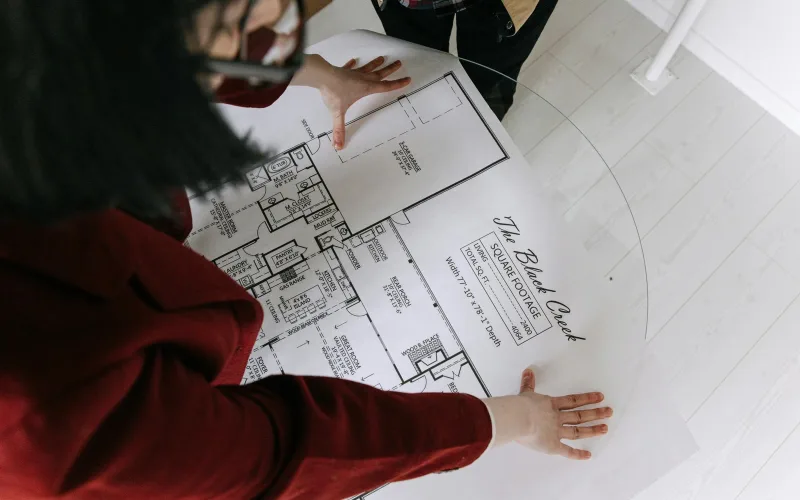
A master plan is the overall layout of the development. It shows where the buildings, swimming pool, roads, walkways, parking, gardens, children’s areas, technical rooms and leisure zones are located.
It helps buyers understand what is not always clear from marketing images: which building is quieter, where people will walk, which windows face another building, where the sun will be stronger, and which units are close to lifts, service areas or technical zones.
In Thailand, this is especially important. The climate is hot, the sun is strong, humidity is high, and many projects are built quite densely. A wrong choice of building or orientation may later affect daily comfort, rental demand and resale value.
Why the master plan matters more than a render
A render shows the mood of the project. A master plan shows the structure of real life inside it.
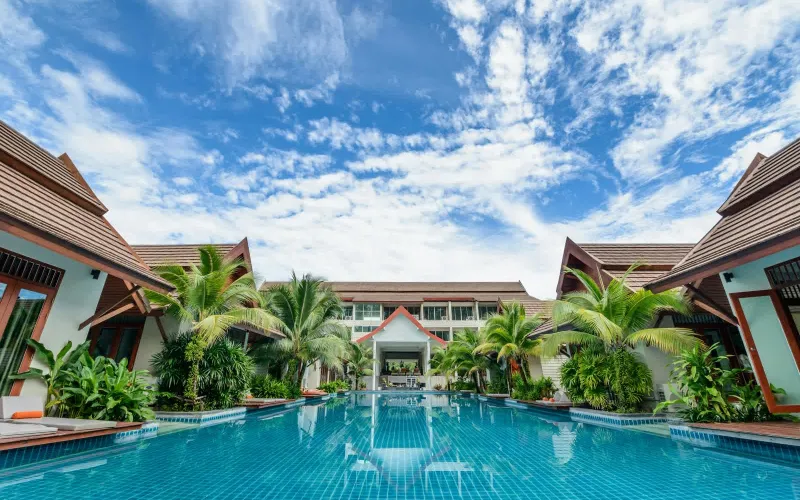
A presentation may show a beautiful swimming pool, green areas and a private-looking building. But the plan may reveal that a selected unit faces another building, a parking area, an access road or a technical zone.
A beautiful façade does not answer the key buyer questions:
where the sun comes from;
which building is closer to the road;
where people will walk;
which units face each other;
where pool noise may come from;
whether future buildings can block the view;
how convenient the route from lobby to unit is;
where lifts, stairs and service rooms are located.
That is why the master plan should be checked before reservation.
1. Building position: not all buildings are equal
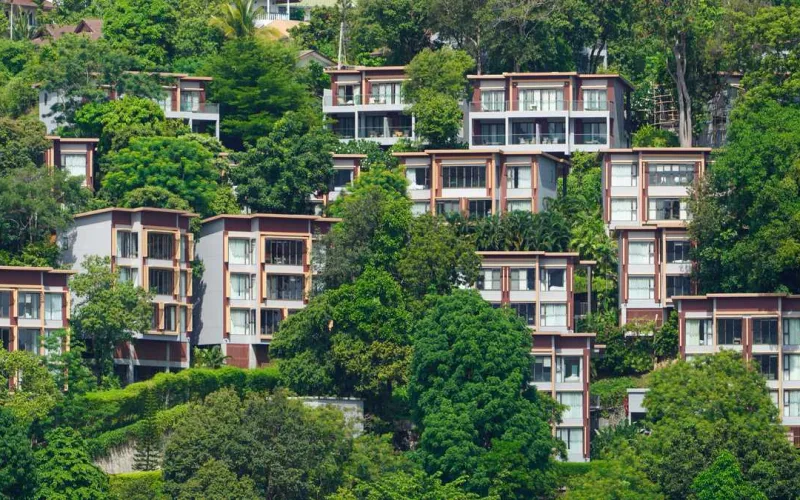
In large projects, there may be several buildings. At first glance, they all belong to the same development, share the same facilities and have the same brand. But in reality, the building position can change a lot.
One building may be closer to the sea, another closer to the road. One may face the pool, another may face a neighboring plot. One may be quieter, another may be close to the entrance, parking or future construction nearby.
Buyers should check:
which building is closer to the beach or main entrance;
which building is farther from the road;
what the windows face;
whether there are technical areas nearby;
whether windows face another building directly;
how convenient access is to lifts, parking, pool and lobby.
Sometimes a building farther from the center of the project may be better: quieter, more private and less exposed to foot traffic.
2. View: sea, pool, city, wall or parking
View is one of the main liquidity factors. It affects daily comfort, rental appeal and resale value.
But project presentations usually show the best possible view, while the buyer may choose a very different unit.
The master plan helps clarify:
where the windows face;
which building stands opposite;
whether there is a neighboring land plot;
whether the view can be blocked in the future;
whether the sea view is real or only angled;
what is below the unit: pool, road, roof, parking, café or technical area.
In Thailand, it is important to check not only the direction, but also the floor. A low-floor unit may technically face the sea, but in reality see trees, a roof or another building.
For rental purposes, view matters too. A good view helps attract attention. A unit facing a wall or parking area will often compete mainly on price.
3. Sun and orientation
In Thailand, sun exposure is not a minor detail. It affects everyday comfort.
A unit can look attractive but become too hot. Air conditioning works harder, electricity costs rise, and the apartment feels less comfortable.
Buyers should check:
window orientation;
when direct sun enters the unit;
whether neighboring buildings provide shade;
how much the façade heats up;
whether ventilation is possible;
how the balcony is positioned.
For personal living, it is often better to choose a unit with enough light but without constant overheating. For rentals, this is also a practical advantage.
4. Noise: road, bars, pool, children and equipment
Noise is one of the most underestimated factors.
Buyers often look at layout, size and view, but forget to ask what they will hear from the unit.
Noise sources may include:
main road;
project entrance;
parking area;
nearby bars or cafés;
children’s area;
swimming pool;
pump equipment;
air-conditioning units;
neighboring construction;
loading area;
lift lobby.
A unit near the pool may look attractive, but it can also be noisier, especially in resort-style projects where people spend a lot of time by the water.
A unit near the road may be cheaper, but it is not always a good choice for long-term living.
5. Walkways and people flow
The master plan also shows how people will move around the project.
Large developments have main routes: from lobby to lifts, from lifts to pool, from parking to buildings, from entrance to common areas.
If a unit is close to an active walkway, privacy may be weaker. People may constantly pass by windows, balcony or entrance door.
Buyers should check:
main entrance;
lobby location;
lifts;
route to the pool;
parking access;
waste rooms;
service corridors;
delivery and maintenance zones.
Sometimes the plan shows that a unit looks good on paper but sits in a high-traffic area.
6. Lifts, stairs and service areas
A unit close to the lift is convenient. But if the entrance door faces the lift lobby directly, it may be noisier and less private.
Stairs also matter. Sometimes they are useful, sometimes they create extra movement nearby. Service rooms, waste rooms, technical spaces and staff areas should also be checked.
Before reservation, buyers should ask:
where the lifts are;
how many lifts serve the building;
whether there is a service lift;
where the waste room is;
where technical rooms are located;
how far the unit is from the lift lobby;
whether there is a fire stair nearby.
These details may look small until someone starts living in the unit every day.
7. Pool and common areas: advantage or noise source
A pool near the building can be a benefit: better view, resort feeling and easy access.
But a unit directly above the pool is not always the best option.
Buyers should understand:
whether there will be noise from people;
pool opening hours;
whether there is a bar, café or lounge area nearby;
where balconies face;
how private the unit feels;
whether common areas look directly into the unit.
For short-term rental, a pool view can work well. For permanent living, a quieter side facing garden, city or sea may be more comfortable.
8. Parking, entrance and technical zones
Entrances, parking and technical zones rarely appear in beautiful marketing images. But they are visible on the master plan.
If a unit is close to the entrance, there will be car movement. If it is near parking, there may be noise, headlights and exhaust. If it is near technical areas, equipment noise is possible.
Buyers should check:
entry and exit points;
parking location;
loading areas;
transformer and pump rooms;
waste collection areas;
service vehicle routes.
These factors are especially important for low floors.
9. Future construction nearby
The master plan shows the project inside its land plot. But buyers should also look around it.
If there is empty land, old buildings or low-rise structures nearby, future construction may appear there. This can affect view, noise and resale value.
Before buying, check:
what surrounds the plot;
whether there is empty land nearby;
height of neighboring buildings;
whether the view can be blocked;
what projects are under construction nearby;
what the area map shows.
This is especially important in active development areas such as Pattaya, Jomtien, Wongamat, Rawai, Bang Tao, Kamala and Layan.
10. How the master plan affects rental and resale
Buyers may think that size and price are enough. But rental and resale markets often evaluate a unit more carefully.
Units are usually easier to rent and resell when they have:
clear view;
good floor;
less noise;
convenient lift access;
enough privacy;
no bad adjacency to technical zones;
logical layout;
strong overall positioning inside the project.
A weak unit in a good project may still be weak. A good unit in an average project may sometimes be more liquid than a leftover unit in an expensive development.
What to ask before reservation
Before paying a reservation fee, ask not only for the unit layout, but also for the project master plan.
Useful questions:
where the building is located;
what the windows face;
what will be opposite the unit;
which floor has the best view;
where lifts and waste rooms are;
where the entrance and parking are;
where technical zones are;
whether there may be pool or road noise;
whether there are empty land plots nearby;
which buildings will be constructed first;
which views may be blocked.
If the sales manager cannot answer these questions clearly, there is no need to rush.
Conclusion
A master plan is not just a formal picture in a brochure. It is the map of future life inside the project.
It helps buyers see problems that cannot be fixed later: noise, overheating, poor view, high foot traffic, proximity to road, parking, lift or technical zone.
When buying property in Thailand, it is important to choose not only the project and layout, but also the exact unit inside the development. The master plan helps understand which building, floor and orientation truly fit your scenario: living, winter stays, rental use or resale.
At LumiThai, we look beyond price and presentation visuals. We check location, building position, view, orientation, noise, walkways, costs, quota and the real strengths of a specific unit.
If you’d like the right building, floor and orientation chosen around your goal, start from our homepage: it brings together Thailand property selection with project checks and deal support.