Buying an apartment in a condominium development in Thailand requires a careful review of the project's construction documents. A developer may launch sales and accept reservations while certain administrative approvals are still being processed. Buyers therefore need to establish what construction has been authorised and whether the proposed building matches the approved documents.
Thailand's Building Control Act B.E. 2522 (1979) governs building permits, construction procedures and the responsibilities of local authorities. Section 39 bis also provides a statutory notification procedure for qualifying construction projects. The applicable route must be identified before assessing the documents.
This guide explains how to check a building permit, identify the issuing authority, review approved plans and examine potential risks before paying a reservation fee or signing a purchase agreement.
Which Documents Authorise Condominium Construction in Thailand?
Under Section 21 of the Building Control Act, building construction generally requires permission from the competent local authority. The law also provides a separate notification procedure under Section 39 bis, subject to prescribed documentation, professional responsibilities and acknowledgement requirements.
For a condominium project, buyers should determine whether the developer relies on:
- A building permit: formal authorisation issued by the competent local authority for a specified construction project.
- A Section 39 bis notification: a statutory alternative involving submission of prescribed information and technical documents, with an official acknowledgement issued under the applicable procedure.
Additional requirements may apply depending on building size, height, land use, location and environmental obligations.
A registered development company or a professionally prepared sales brochure does not establish that all required construction approvals have been completed.
When comparing new residential developments across Thailand, buyers should investigate the permitting stage alongside the expected completion date and payment schedule.
Who Issues Building Permits and Where Can Buyers Verify Them?
Building approvals fall within the responsibilities of the competent local administrative authority. Depending on the project's location, the responsible office may be a municipality, another local administrative organisation or the relevant Bangkok Metropolitan Administration department.
Begin by identifying the precise land parcel and the Thai legal name of the development. Marketing names frequently differ from the names recorded in official documents.
Request the following information from the developer:
- The project's registered Thai name.
- The full legal name of the permit applicant.
- The land title details and exact location.
- A copy of the building permit or Section 39 bis acknowledgement, as applicable.
- The document number, issue date and issuing authority.
Contact the construction or engineering division of the competent local authority and ask whether the document can be confirmed against its official records. Check that the details correspond to the relevant development and land parcel.
Depending on the authority and document type, verification may require a formal request, assistance from the developer or an authorised representative. Access to complete technical drawings may be subject to administrative rules.
An independent Thai lawyer can help identify the correct office, submit enquiries and review discrepancies between the documents provided by the seller and the official record.
Practical point: a photograph of a permit is useful for identifying its details. Independent verification is needed to establish authenticity, current status and relevance to the project being purchased.
Seven Building Permit Checks Before Buying an Off-Plan Condo
The following process provides a structured way to investigate a new condominium before making substantial payments.
1. Identify the Permit Holder
Compare the legal entity named in the construction documents with the company selling the apartments and signing the purchase agreement. If several companies are involved, request evidence of their respective roles and authority.
Establish who owns the land and on what legal basis the developer can carry out the proposed works.
2. Verify the Document Number and Date
Obtain the permit or notification reference number, its date and the responsible office. Ask whether the authorisation remains valid and whether any extensions or amendments have been recorded.
A submitted application, an issued permit and the actual commencement of construction are separate milestones.
3. Match the Land Parcel
Compare the construction documents with the land title. A Chanote, or Nor Sor 4 Jor, is a registered land title commonly used to establish ownership and identify the parcel.
Land records should be checked for ownership, registered encumbrances and relevant restrictions. Access to a public road and the legal status of any access arrangements also deserve attention.
Where a development covers several plots or construction phases, confirm which parcels are included in the relevant permits.
For the wider purchase process, consult our guide to documents buyers should review before acquiring property in Thailand.
4. Check Approved Building Height and Number of Floors
Compare the proposed number of storeys, building height and placement of structures with the approved project drawings.
Location-specific restrictions may apply in coastal areas, hillside locations and designated planning zones. A project's proximity to the beach alone is insufficient to determine which height limits apply.
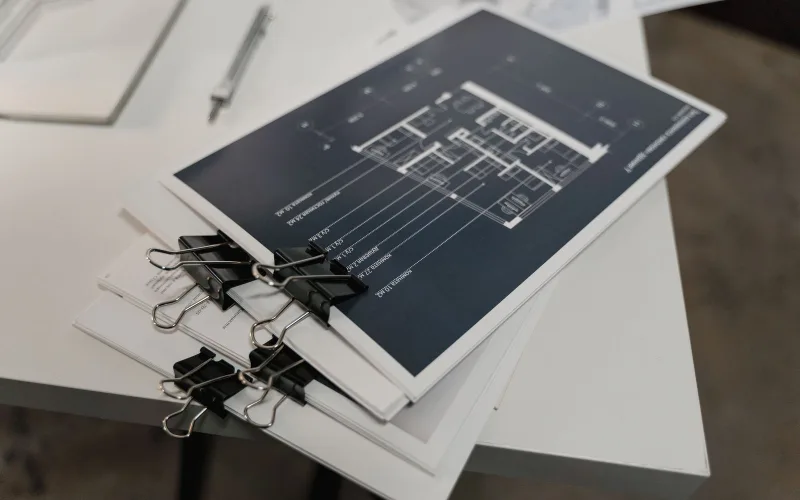
5. Examine the Approved Drawings
Review the authorised building layout, circulation areas, staircases, lifts, parking facilities and major shared spaces. Compare these plans with the materials used to market individual apartments.
Swimming pools, rooftop structures, additional floors and substantial alterations should receive particular attention.
A qualified architect or engineer may be needed to assess whether the approved drawings and actual construction comply with the relevant technical requirements.
6. Establish the Environmental Approval Status
Environmental Impact Assessment, commonly known as EIA, is mandatory for certain categories of property developments in Thailand. When applicable, buyers should confirm the environmental approval status and the identity of the project covered by the decision.
Environmental approval and building authorisation address different legal requirements. Each must be assessed according to its own status and supporting documents.
7. Investigate Subsequent Project Changes
Developers sometimes revise their plans before or during construction. Changes to building height, structural design, block placement or other substantial features may require additional regulatory steps.
Request the latest approved drawings and details of relevant amendments. The documents should correspond to the building and apartment currently being offered for sale.
Approved Building Plans: Height Limits, Setbacks and Zoning
Building regulations in Thailand include requirements affecting height, land use, building placement and other construction characteristics. The restrictions applicable to an individual project depend on its location and relevant legislation.
Coastal properties, developments on slopes and sites within environmentally sensitive areas may require particularly careful review.
The following matters should be checked against the approved documentation:
- Building height: the permitted height and number of storeys.
- Setbacks: required distances from boundaries, roads and neighbouring structures.
- Land use: whether the proposed residential development is permitted at the location.
- Building configuration: the approved position, dimensions and arrangement of structures.
- Access and technical facilities: applicable requirements for access routes, emergency provisions and building services.
A generic online zoning map can provide initial context, but a decision about a particular site should rely on the current applicable rules and official land and construction records.
Buyers considering condominiums for sale throughout Thailand can use these checks to compare developments across different provinces.
EIA Approval vs Building Permit: What Is the Difference?
Environmental Impact Assessment examines a project's expected effects on the environment and surrounding communities. It may address issues such as water management, traffic, noise, waste and proposed mitigation measures.
Building authorisation concerns the legal basis for carrying out construction under applicable building rules and approved technical documents.
Buyers should distinguish between several stages:
- Submission of an environmental assessment report.
- Approval of the environmental report, where required.
- Issuance of the applicable building permit or completion of the statutory notification procedure.
These stages have different legal consequences. For projects subject to EIA requirements, the environmental decision and the relevant construction authorisation should be verified separately.
Particular care is advisable when a development has only recently entered the market. Early sales activity may begin while administrative applications are still progressing.
Risks of Buying Before a Building Permit Is Issued
Some developers market apartments before completing all required approval procedures. Buyers considering these projects should establish precisely which permissions remain outstanding.
If the project lacks the authorisation required to proceed with construction, work may be delayed. Where construction breaches applicable rules, competent authorities may require corrective action, order work to stop or take other measures permitted by law.
The outcome depends on the circumstances of the particular project and the relevant authority's decisions. A pending application does not automatically mean that approval will be refused.
From a buyer's perspective, uncertainty can affect completion dates, apartment specifications, financing arrangements and the recoverability of payments.
Before entering a contract, establish:
- Which approvals the developer is still required to obtain.
- Whether the agreement specifies deadlines for those approvals.
- What happens if construction cannot begin as planned.
- Whether the buyer may terminate the agreement following a refusal or substantial delay.
- How deposits and instalments will be treated if the project does not proceed.
- Whether significant changes to the approved building require buyer notification or consent under the contract.
Where a building design changes after authorisation, obtain the latest approved version and clarify whether the proposed apartment remains consistent with the original sale terms.
What Buyers Should Do Before Paying a Reservation Fee
Ask the developer for written confirmation of the building permit status and other approvals relevant to the project. Where documents remain pending, request a clear explanation of the outstanding procedures.
Compare the information in the permit, land records, approved plans and purchase documents. Any discrepancy should be resolved before a substantial payment is made.
Deposit refund provisions deserve special attention. Our guide to reservation agreements and purchase contracts for off-plan property explains the contractual points to review before transferring funds.
For substantial purchases, independent legal advice is advisable. A construction specialist may also be needed to assess technical drawings and the building's conformity with approved specifications.
The purpose of these checks is to establish who is authorised to build, what has been approved, which procedures remain outstanding and what obligations the developer has accepted in writing.