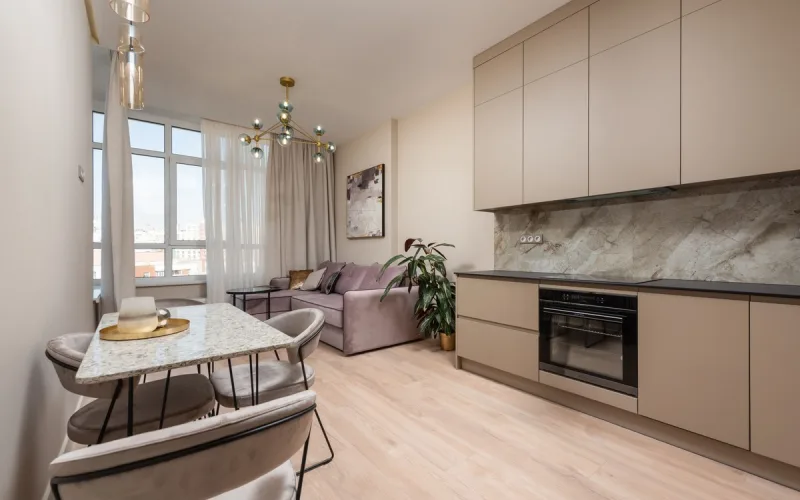
The price shown in a developer’s advertisement or price list normally refers to the selected unit. It may not represent the full amount required before the buyer receives the keys. Furniture, appliances, utility connections, the sinking fund, advance maintenance fees and registration charges may appear as separate items.
The final package is determined by the unit specification, inventory list, reservation terms and sale and purchase agreement. Two condos with the same advertised price can require substantially different budgets at handover.
What a Developer’s Condo Price Actually Means
A project page may show the starting price of the least expensive available unit or the price of a specific condo. The new developments in Thailand catalogue helps buyers compare projects, while a final quotation should always be requested for the exact unit being considered.
A written developer quotation should state:
- the unit number, floor and registered area;
- the base unit price;
- floor, view, position or ownership premiums;
- the included finish and fitted equipment;
- the price of optional packages;
- the payment schedule;
- the amounts payable at handover and ownership registration.
Expressions such as “fully furnished” or “turnkey” are too broad on their own. The binding description should be contained in the agreement and its attachments, with the materials, appliances, furniture and quantities clearly listed.
Finishing, Kitchen and Bathroom Fixtures
Many modern Thai developments deliver units with completed interior finishing. The exact standard differs between projects and construction phases. Buyers should verify the full specification rather than relying on the appearance of the showroom.
| Item | What May Be Included | What to Confirm |
|---|---|---|
| Floors and walls | Flooring, painted walls and completed ceilings | Materials, finishes and substitution rules |
| Bathroom | Sanitary ware, shower, taps, mirror and water heater | Brands and whether a shower screen is included |
| Kitchen | Upper and lower cabinets, sink and worktop | Cooktop, extractor hood and refrigerator |
| Built-in items | Wardrobes, internal doors and fitted lighting | Dimensions, quantities and materials |
| Air conditioning | One or more installed air-conditioning units | Number, brand, capacity and installation |
Show-unit photographs and architectural renders illustrate the intended appearance. The signed unit specification and inventory list determine what the buyer is entitled to receive.
Furniture, Appliances and Optional Packages
Furniture may be included in the base price, sold as a separate package or offered through a temporary promotion. Each arrangement produces a different final budget, so the phrase “fully furnished” should be supported by a detailed inventory.
For a furniture package, request:
- a complete list of items and quantities;
- photographs or drawings of the applicable package;
- the dimensions of beds, sofas, tables and wardrobes;
- the appliance list with brands or minimum specifications;
- the package price and payment schedule;
- the installation deadline;
- the developer’s substitution policy.
Curtains, kitchenware, bedding, televisions, washing machines and decorative items may appear in the showroom without forming part of the sale. Every item should be confirmed in writing.
Utility Meters, Connections and Deposits
Handover costs may include electricity and water connections, meter installation or registration, and refundable utility deposits. The billing structure varies between developments and utility providers.
The handover statement should separate:
- the cost of the meter;
- the connection charge;
- the refundable deposit;
- any initial service balance;
- internet and television installation.
The statement “utilities connected” does not automatically mean that every related charge has been included. Ask which deposits are refundable and who holds them after ownership is transferred.
Sinking Fund and Common Area Maintenance Fees
The sinking fund and common area maintenance fee serve different purposes and are normally shown as separate charges.
The sinking fund is a one-time contribution reserved for major future work involving the building façade, roof, lifts, engineering systems and other common property. The amount is commonly calculated from the unit area and the rate adopted for the project.
The common area maintenance fee is a recurring payment covering security, cleaning, pools, landscaping, management staff, common-area electricity and routine upkeep.
At handover, the developer may collect several months or the first year of maintenance fees in advance. The statement should identify the rate per square metre, the advance period and the separate sinking-fund amount.
Registration Charges and Taxes
The unit price may exclude expenses arising when ownership is registered. Depending on the transaction, these can include the transfer registration fee, stamp duty or specific business tax, together with other charges required under the applicable rules.
Some expenses belong to the seller, while others may be allocated between the developer and buyer in the contract. A “50/50 fees” clause should identify the exact charges being divided, the value used for calculation and any cap on the buyer’s contribution.
Request an estimated registration statement with each charge shown separately. The final amount should be confirmed before ownership registration according to the agreement and the rules applying at that time.
How to Compare the Real Cost of Two New Condos
When comparing condos in Thailand, use the same cost categories for every project. A lower unit price may be accompanied by a paid furniture package and substantial handover charges. A higher price may already cover a completed package and part of the initial costs.
Use this calculation:
Total budget = unit price + unit premiums + optional packages + utility meters and deposits + sinking fund + advance maintenance fees + the buyer’s share of registration expenses.
Before paying a reservation fee, prepare a list of questions to ask the developer before reserving. The answers should appear in the written quotation or the agreement attachments.
Then compare the quotation with the reservation and purchase terms. The guide to checking an off-plan reservation and sale agreement explains where the price, payment schedule, specification and parties’ obligations should be recorded.
The most useful document is a consolidated statement showing every included item and every amount payable in addition to the unit price. It reveals the real budget and allows projects to be compared on equal terms.