

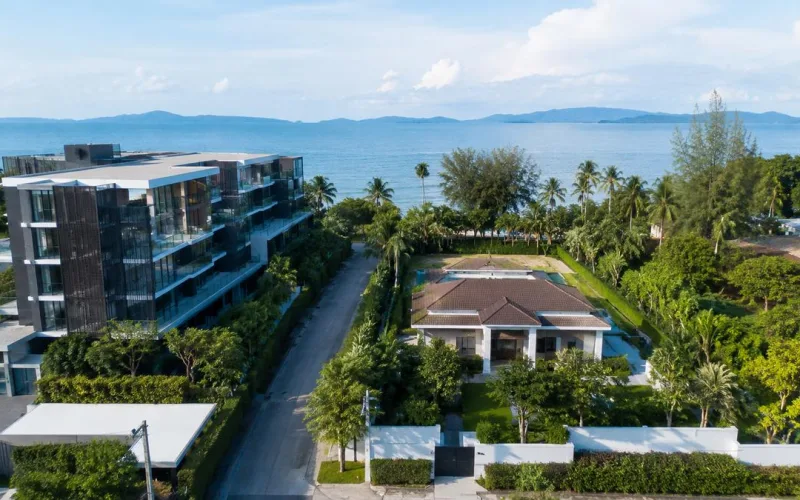
The key difference: condo unit versus villa structure and land
The legal difference between buying a condo and buying a villa in Thailand starts with the object of ownership. A condominium is a separate unit inside a registered condo building. A villa usually involves both a physical house and the land under it.
For foreign buyers, a condo is often the simpler route. If foreign quota is available, the unit can be registered in the buyer’s name as foreign freehold. A villa requires a separate land structure, such as long-term lease, usufruct, superficies or a corporate setup.
Buyers who want the clearest ownership route often start by comparing condos and apartments in Thailand with villas by ownership structure, running costs and resale potential.
Condominium ownership: foreign freehold and the 49% quota
A condo unit can be registered under foreign freehold. This means direct ownership of the unit under the buyer’s name, registered at the Land Department.
The key limit is the foreign ownership quota. In one condominium building, foreign buyers can own up to 49% of the total saleable unit area. The remaining share is held under Thai quota or other structures.
To register foreign freehold, the buyer usually needs to prove that purchase funds came into Thailand from overseas in foreign currency. The bank issues a Foreign Exchange Transaction form or a confirmation letter for the Land Department.
Villa ownership: house and land require a separate structure
A villa works differently because the building and the land under it are treated separately. A foreign buyer can hold rights to the physical structure, while the land requires its own legal arrangement.
Common structures include long-term land lease, usufruct, superficies or a Thai company. Each option has its own duration, control level, costs and risk profile.
In island locations, especially when looking at the Phuket property market, villas are often bought for living, holidays and rental use. Buyers should understand who owns the land, what title applies and what rights remain in case of resale or inheritance.
Freehold, leasehold, usufruct and superficies
Freehold for a condominium means registered ownership of the unit. For a foreign buyer, this is usually the clearest route when quota is available and the project documents are clean.
Leasehold is a long-term lease. For villas, this often means leasing the land while holding rights to the building separately. A registered land lease in Thailand is usually limited to 30 years, and renewal clauses should be reviewed carefully.
Usufruct gives a right to use the property. Superficies can secure rights to a structure built on another person’s land. These tools can strengthen the buyer’s position when they are properly drafted and registered.
Thai company ownership: where the risk starts
Some buyers consider a Thai company to control land linked to a villa. In this structure, shareholders, real business activity, accounting, tax filings and source of funds all matter.
The main risk is a nominee setup where Thai shareholders exist only on paper. A company created solely to hold land for a foreign buyer can attract scrutiny from authorities.
Before using this route, buyers should review corporate documents, shareholders, tax filings, contracts and the real business purpose of the company. This structure should be reviewed by an independent lawyer representing the buyer.
Taxes, fees and holding costs
Buying either a condo or a villa can involve transfer fee, stamp duty, specific business tax, withholding tax, sinking fund and common area fees.
A condo usually has a more predictable cost structure: building maintenance, sinking fund, utilities and transfer costs. A villa may add garden care, pool maintenance, security, land-related costs, engineering systems and staff.
Before purchase, calculate the full holding cost, including payments after registration. This is covered in the guide to taxes and extra costs when buying property in Thailand.
Off-plan property: extra contract risks
If a condo or villa is bought off-plan, the legal review becomes broader. The buyer should understand the payment schedule, handover date, delay penalties, finishing scope and refund terms.
Special attention should go to rental yield promises, management programs, future facilities and marketing claims in the presentation. The contract should contain clear obligations rather than broad promotional wording.
If the developer emphasizes yield, payment plans or guaranteed management, review what to check in developer promises in Thailand before paying a deposit.
What to check before paying a deposit
For a condo, check the title deed, ownership quota, owner name, common fee balance, project permits, sale agreement and fund transfer documents.
For a villa, the checklist is broader: land title, plot boundaries, access road, servitudes, construction permit, land lease, building rights, taxes, seller company and estate management rules.
A deposit should be paid after key documents are reviewed and refund terms are agreed. This is especially important for villas, off-plan properties and transactions involving complex ownership structures.
Which format is legally simpler for a foreign buyer?
The simplest legal route for a foreign buyer is usually a condominium in foreign freehold, provided that quota is available, funds are transferred correctly and project documents are checked.
A villa offers more privacy, land use and space, while the ownership structure is more complex. The buyer needs to review the land title, lease or land rights, building rights, estate costs and long-term protection.
Start with the purpose of the purchase. For straightforward registration and resale, a condo is often easier. For family living, privacy and private outdoor space, a villa can work well when the legal structure is transparent before deposit.