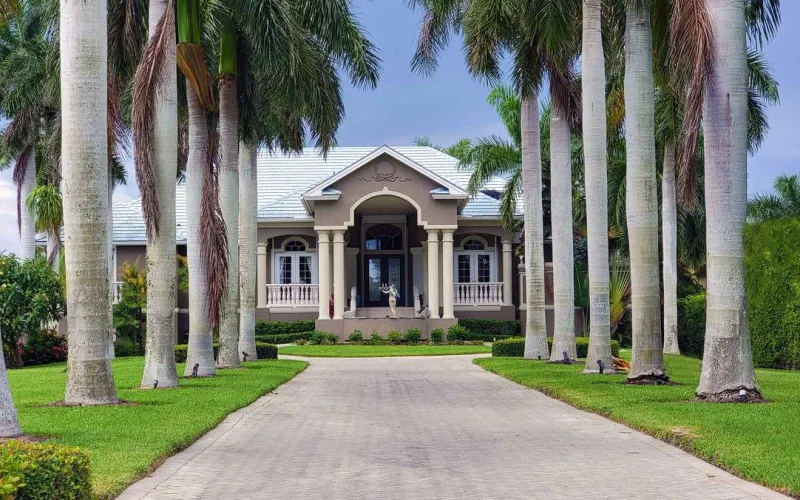
Why villa road access is a legal issue
When buying a villa in Thailand, buyers often focus on the house, pool, land size, view and price. Road access may look obvious: if you can drive to the villa today, everything seems fine. In practice, this can be one of the weakest points in a deal.
A physical driveway does not always mean legal access. The road may pass over a neighbouring land plot, private developer land, another owner’s parcel or a temporary access strip without properly registered rights.
For the buyer, this is a serious risk. A villa can be beautiful, completed and properly built, but without clear legal road access it can become harder to use, rent out, resell or connect to utilities.
What an easement or servitude means in Thailand
An easement, often referred to as servitude in Thai property law, is a legal right to use part of another land plot for the benefit of your own land. In villa transactions, this usually concerns access, vehicle passage, utility lines, drainage or maintenance access.
The key point is simple: if access to the villa crosses someone else’s land, that right should be properly documented. A verbal promise, developer assurance or “everyone uses this road” is not the same as a registered legal right.
In Thailand, servitude should be checked through land documents and Land Department records. The buyer needs to know not only that the road exists, but also why the plot has the right to use it.
Physical road vs legal right of access
A physical road is what you see: concrete, gravel, gates, a driveway or an access path. A servitude is the legal right to use that road.
Problems appear when the road exists physically, but the access right is not properly recorded. A neighbour may allow access today, but the land can later be sold, fenced or disputed. The new owner may block the route, demand payment or challenge the boundary.
Before paying a deposit, separate two questions: can you drive to the villa today, and does the land have a legal right to access the road in the future?
Chanote and where road access is checked
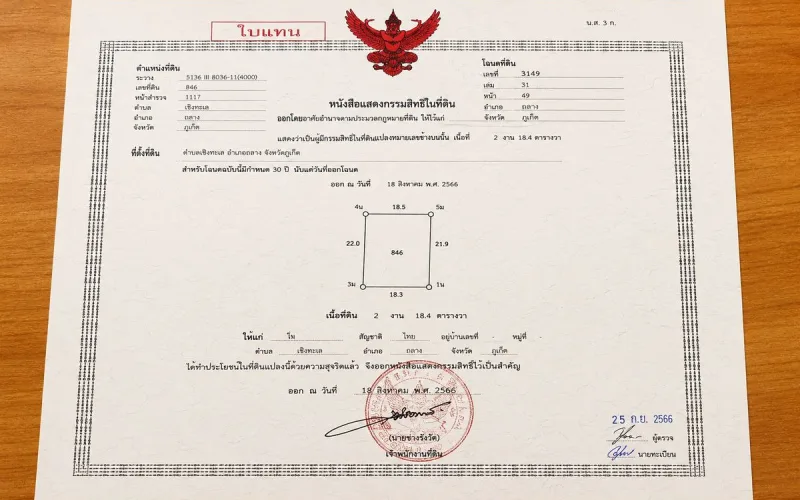
Chanote is one of the key documents in Thai land due diligence. It is used to check land boundaries, ownership, registration history and important registered rights or encumbrances. If access to the villa requires a servitude, it should be checked through the documents and Land Department records.
The buyer should request a copy of the Chanote, land plan, road documents, boundary information and confirmation that legal access to a public road exists. If the road crosses a neighbouring plot, it is important to confirm whether a registered right of access exists.
The actual road should also match the survey and boundaries. Sometimes the road on the ground does not follow the documented boundaries or is used more widely than the documents allow.
Landlocked property and way of necessity
A landlocked property is a plot without direct access to a public road. In Thailand, a legal mechanism known as way of necessity may allow the owner of a landlocked plot to seek access over neighbouring land.
However, a buyer should not treat this as a comfortable substitute for properly registered access. It may require negotiations, compensation, legal steps and sometimes a dispute. It is not the same as clear access confirmed before purchase.
If a villa plot is landlocked, the buyer should check who owns the surrounding land, where the nearest public road is, whether access is already registered and whether the issue can be resolved without conflict.
Private roads in villa projects
In many villa projects, internal roads look like shared infrastructure. Buyers see gates, security, concrete roads, lighting and landscaping, and assume the access issue is solved. Legally, the road may still belong to the developer, a management company, a separate owner or a group of owners.
Before buying, it is important to understand who owns the internal roads, who maintains them, whether villa owners have long-term access rights and what happens after the developer exits the project. Access from the project to a public road should also be checked.
If the road remains controlled by the developer without clear documents, the buyer depends on future decisions of a third party. This can weaken the villa’s resale position.
Utilities: water, electricity and drainage
Road access is not only about cars. Water pipes, electric cables, drainage systems and internet lines may cross neighbouring plots or private roads. If the right to install and maintain utilities is unclear, the owner may face practical problems after purchase.
This is especially important for hillside villas, secluded land plots, smaller private projects and homes outside large managed estates. Water, electricity, septic systems, drainage and stormwater solutions often depend on shared roads or neighbouring land.
That is why due diligence should include not only road access, but also legal access for utility installation and maintenance.
What to check before paying a deposit
Before paying a villa deposit, check the following:
- whether the land has direct access to a public road;
- if not, what legal basis allows the road to be used;
- whether the servitude is registered at the Land Department;
- whether the actual road matches the land survey;
- who owns the private road inside the villa project;
- whether vehicle access is allowed, not only pedestrian access;
- whether utilities can be installed and maintained;
- whether gates, road width, construction access or service access are restricted;
- who pays for road maintenance;
- whether access rights transfer to the next owner on resale.
If any of these points is unclear, the deal should not be rushed. A deposit should be paid only after document review or with refund conditions if legal due diligence reveals an access problem.
Main risks for the buyer
The main risk is buying a villa in Phuket or Pattaya that is difficult to use. A neighbour may restrict access, install gates, dispute boundaries or demand payment. In some cases, owners face problems with road repairs, construction access, pool maintenance, waste removal or utility connections.
The second risk is weaker resale liquidity. A future buyer will ask the same questions: where is the road, who owns it, where is the servitude, can vehicles access the villa and what do the documents say? Weak answers usually mean longer sale time and a lower price.
The third risk is a legal dispute. Even if the law provides a way to request access for landlocked property, resolving it through negotiation or court can be slow and expensive. For a foreign buyer, this is an especially uncomfortable scenario.
When you need a lawyer and technical inspection
A lawyer is needed if the road crosses someone else’s land, the plot has no direct public road access, the villa is in a small private project, road documents are unclear or the seller gives vague answers.
A technical inspection is needed to check boundaries, road width, surface condition, drainage, slope, service vehicle access and utility routes.
The best approach is to check the villa before paying a deposit: legal documents, Chanote, road access, servitude, utilities and maintenance obligations. This is much cheaper than solving a road dispute after purchase.
How LumiThai helps with due diligence
LumiThai helps buyers look beyond villa photos. We check the location, road access, land documents, ownership structure, costs, project status and weak points of the deal.
If a villa has a road access or servitude risk, it should be identified before reservation. Sometimes the property can still be purchased after proper legal review. Sometimes it is better to walk away and choose a villa with cleaner access structure.
Before buying a villa in Pattaya or Phuket, remember one simple rule: the road should exist not only on the map and in photos, but also in the documents.