Why the Area Matters More Than the Render
When buying property in Thailand, it is easy to focus on the project itself: the pool, lobby, balcony view, furniture package and projected rental income. But over the long term, the area often matters more than the render. A good project in a weak location can be harder to rent or resell than a simple unit in an area with growing infrastructure and real demand.
The area affects rental demand, tenant profile, resale liquidity and future pricing. That is why buyers should look beyond the building and study what is happening around it.
If you are still comparing locations, start with the broader market: property in Thailand. For island locations, compare property in Phuket and property in Pattaya.
Sign 1: Transport Access Is Improving
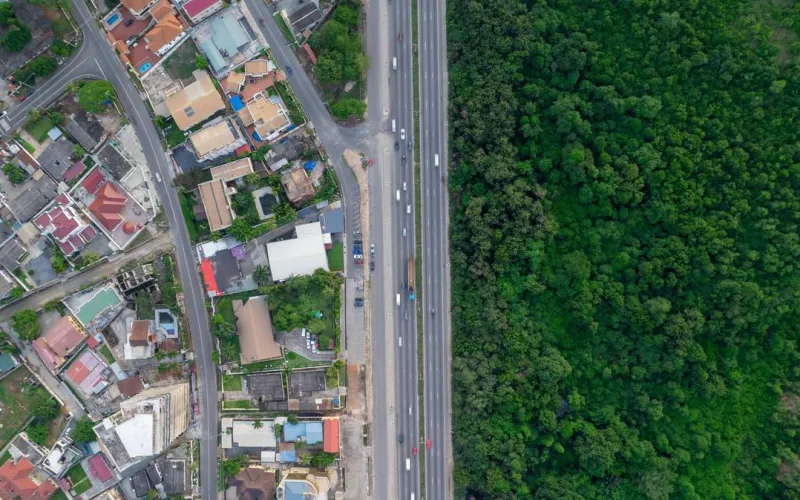
One of the strongest signs of future growth is better access. In Thailand, distance in kilometers can matter less than real travel time. An area may look close to the beach or town center, yet still feel inconvenient because of traffic, narrow roads or poor exits.
Positive signs include:
road widening;
new access roads;
improved routes to beaches, schools and shopping areas;
easier access to the airport;
better daily mobility for residents.
For investors, this matters for two reasons. First, tenants can move around more easily. Second, future buyers will value convenience when comparing similar properties.
Sign 2: Daily Infrastructure Is Appearing
An area does not become strong because a brochure calls it “the next lifestyle destination.” It becomes strong when people can live there comfortably every day.
Look for supermarkets, cafés, pharmacies, schools, nurseries, gyms, clinics, service businesses and places to walk. These are practical signs that the area is moving from a speculative location into a real residential environment.
This also affects rentals. Holiday tenants often care about the beach, restaurants, pool and easy transport. Long-term tenants care about quiet surroundings, parking, internet, groceries, schools and healthcare.
Sign 3: Several Developers Are Building Nearby
One new project does not prove that an area is developing. A stronger signal appears when several developers launch different projects in the same zone. This usually means the market sees broader demand.
Still, buyers need to be careful. If too many similar units are built for the same type of tenant, future rental and resale competition may become stronger.
Check:
how many projects are being built nearby;
whether the formats are different;
whether there are completed projects with real tenants;
whether cafés, services and daily infrastructure are following;
whether every project is selling the same rental promise.
If you are comparing off-plan projects, start with new developments in Thailand.
Sign 4: Rental Demand Is Clear
A growing area should answer one basic question: who will live or stay here?
In Thailand, demand usually comes from several groups:
short-term holidaymakers;
winter visitors staying for one to three months;
expats and families;
end-use buyers;
investors focused on resale.
Each group has different priorities. Tourists want beach access, cafés, views, pools and simple logistics. Long-term tenants want quiet surroundings, a proper kitchen, stable internet, parking, shops, schools and hospitals. Resale buyers care about location, building quality, liquidity and entry price.
If an area serves only one demand scenario, the risk is higher. If it attracts both tourists and long-term residents, it usually has a stronger base.
Sign 5: The Area Is Close to an Established Location
Growth often starts next to expensive areas. When mature locations become too costly, buyers and tenants begin to look at nearby zones. This creates a second layer of demand.
Examples of this logic include:
areas near Bang Tao and Laguna;
residential pockets near Rawai and Nai Harn;
quieter zones near Jomtien and Pratumnak;
locations close to existing schools, shops and lifestyle centers.
This does not mean every neighboring area will grow. Roads, demand, infrastructure and real occupancy still matter.
Sign 6: Prices Are Still Below Mature Areas
A good investment entry point is often found where the area has started to improve, while prices are still below more established locations. Too early means waiting risk. Too late means most of the growth may already be priced in.
Compare more than the price per square meter. Look at:
how livable the area already is;
whether similar projects are renting well;
what new supply is coming;
how many units will compete after completion;
how prices compare with nearby mature areas;
whether growth is supported by real demand.
For rental-focused buyers, management is also important. Read more here: who manages your property in Thailand after purchase.
Sign 7: The Area Attracts More Than Investors
If a location is marketed only to investors, treat it carefully. Strong areas usually attract several audiences: residents, tenants, families, business owners, holidaymakers and resale buyers.
When schools, cafés, sports facilities, services and long-term tenants appear, the area becomes less dependent on marketing and more supported by daily life.
For resale, this matters a lot. The wider the future buyer pool, the easier it is to exit.
Red Flags to Check Before Buying
Not every developing area becomes successful. Sometimes the growth exists only in sales presentations, while the surroundings remain empty for years.
Be careful when:
infrastructure is promised without clear timing;
there is a lot of construction but little daily life;
real travel time is inconvenient;
too many projects target the same tenant profile;
prices are already high before demand is proven;
rental management is unclear;
too many units will enter the market at the same time;
the developer presents future growth as a guaranteed fact.
Before paying a reservation deposit, check documents, payment terms, refund rules and transfer costs. See the full checklist here: safe payments when buying property in Thailand.
How to Check an Area Before Buying
The easiest way is to visit the area at different times of day. Morning shows traffic and daily activity. Daytime shows noise, construction, sun exposure and road quality. Evening shows lighting, safety, restaurants, tourist flow and atmosphere.
Before buying, check:
real travel routes on the map;
time to the beach, school, hospital and supermarket;
new projects nearby;
rental prices in similar completed buildings;
future competition;
local property management options;
rental rules inside the project;
price difference versus mature nearby locations.
If you are choosing a condo, also check floor level, view, noise, humidity and resale appeal. Read more here: ground floor, high floor or sea view.
Thailand Areas Often Linked to Future Growth
In Phuket, buyers often look at Bang Tao, Cherng Talay, Layan, Rawai, Nai Harn, Chalong, Saiyuan and parts of Thalang. The reasons vary: premium demand, new roads, schools, lifestyle infrastructure or long-term residential demand.
In Pattaya, interest often goes to Jomtien, Na Jomtien, Wongamat, Pratumnak and Huay Yai. Each has a different logic: beach rentals, quieter living, villas, family demand or future infrastructure.
The key is not to buy an area name blindly. Even within the same district, two streets can have very different noise, traffic, rental demand and resale potential.
Final Thought
A promising area is not a place where “everything will be built one day.” It is a location where the reasons for growth are already visible: roads, infrastructure, demand, developers, tenants and daily life.
A good property should answer three questions: who will live here, who will rent it, and who will buy it from you in the future. If the answers are clear, the area deserves attention. If everything depends on promises, compare alternatives before committing.