What a townhouse in Thailand is
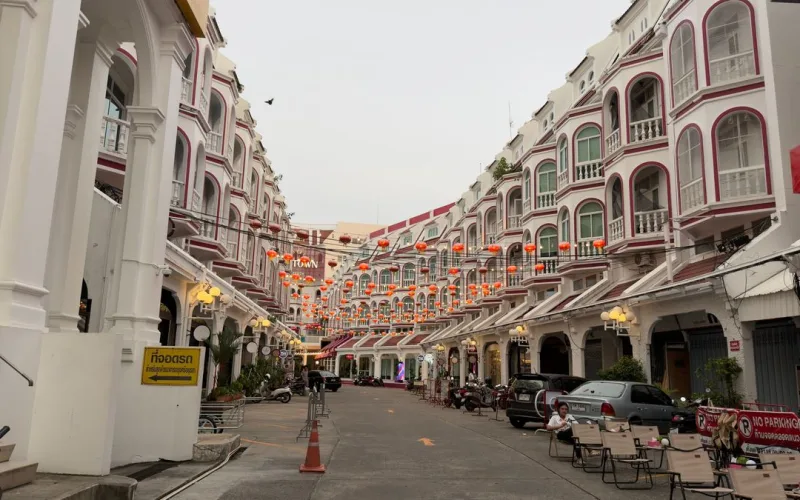
A townhouse is typically a two- or three-storey home connected to neighbouring units by shared side walls. Each unit has its own entrance, private interior space and usually one parking space in front. A small rear yard, service area or terrace may also be included.
In terms of independence, a townhouse is closer to a private house, although the land plot and outdoor space are much smaller than those of a detached villa. The format is common in residential communities around Pattaya, suburban Bangkok and selected areas of Phuket. Developments range from simple urban rows without shared facilities to gated communities with security, swimming pools and professional management.
How a townhouse differs from a condo and a villa
Compared with a condominium, a townhouse usually provides more living space, multiple floors, a private entrance and parking directly outside the home. It is easier to accommodate a family, create a home office and store bicycles, sports equipment and larger household items. Buyers comparing condos in Thailand may still prefer a condominium when foreign freehold ownership, a central location and managed facilities are the main priorities.
A detached villa offers greater privacy, a larger private land plot and the possibility of a private swimming pool. Purchase prices and ongoing costs for gardens, roofs, façades, pools and security are generally higher. Within the wider Phuket property market, a townhouse can offer a more affordable alternative to a villa for long-term living.
| Feature | Condo | Townhouse | Villa |
|---|---|---|---|
| Internal levels | Usually one | Two or three | One or more |
| Private entrance | No | Yes | Yes |
| Private land | No | Small or none | Usually included |
| Shared walls | Yes | Shared side walls | No |
| Building maintenance responsibility | Much of it is covered by common management | Owner is responsible for the unit | Owner is fully responsible |
| Foreign ownership simplicity | Higher within foreign quota | Depends on the land structure | Depends on the land structure |
Who a townhouse suits
A townhouse can work well for a family with children that needs more rooms than a typical condo provides. The ground floor generally contains the kitchen, living area and service space, while bedrooms are located upstairs. This arrangement separates shared living areas from private rooms.
The format can also suit pet owners because a private entrance and small outdoor area make daily routines easier. Buyers should review community regulations, as management may restrict the number or size of animals and their use of shared spaces.
Remote workers may use one bedroom as a dedicated office without sacrificing the family living area. In urban locations, some properties use the ground floor as a shop, studio or workplace. Any commercial use must comply with the building’s permitted use and local regulations.
For retirees and people with limited mobility, the multi-level layout may be inconvenient. Main bedrooms are often on the second or third floor, while private lifts are rare in standard townhouses.
Main advantages of a townhouse
- More space for the budget. The price per square metre is often lower than that of a detached villa in the same area.
- A private entrance. There are no shared corridors and no neighbours directly above or below.
- Parking at the door. Most units provide a parking bay or covered carport.
- Separation of living areas. The living room, kitchen, bedrooms and office can be placed on different floors.
- Practical for long-term living. There is more room for storage, household equipment and family belongings.
- Lower upkeep than a villa. A small plot requires less maintenance and most units do not have a private pool.
Disadvantages and owner expenses
The main day-to-day drawback is the presence of shared side walls. Sound insulation depends on the building’s age, materials and construction quality. A viewing during the evening or weekend can reveal noise that may not be noticeable during normal office hours.
A middle unit receives natural light mainly from the front and rear. Staircases, corridors and central rooms in deeper buildings may remain dark. End units usually have additional windows, better ventilation and a higher asking price.
The owner is responsible for the roof, façade, internal systems, air conditioning and repairs within the unit. A gated community may also charge monthly fees for roads, lighting, security, pools, gardens and other shared facilities. Buyers should request the current tariff and its payment history.
Parking capacity also matters. One space may be sufficient for a single-car household, while a second vehicle can be difficult to accommodate. Community rules may prohibit parking on internal roads.
How a foreign buyer can hold a townhouse
The main legal issue is the land beneath the property. A foreign national generally cannot register a land plot directly in their own name. The foreign freehold mechanism used for qualifying condominium units therefore does not automatically apply to townhouses.
A common structure is a registered long-term lease of the land combined with legally documented rights over the building. Renewal, inheritance, assignment and the responsibilities of each party must be addressed in the contract. The guide to foreign condominium quota explains why condo ownership is structured differently.
Some sellers propose ownership through a Thai company. A legitimate company requires genuine business activity, compliant shareholders, accounting and annual filings. A nominee structure established solely to bypass restrictions on foreign land ownership creates substantial legal risk.
What to check before purchasing
- the seller’s title to the building and land;
- the land classification and permitted use;
- registered mortgages, encumbrances and access rights;
- the building permit and whether the physical layout matches the approved plans;
- community rules and current management fees;
- the condition of the roof, façade, electrical system, plumbing and drainage;
- signs of damp, mould or flooding on the ground floor;
- sound insulation through shared walls;
- parking rights and internal-road regulations;
- the proposed land and building ownership structure for a foreign buyer.
For a remote transaction, the documents, seller’s authority and physical condition of the home should be verified before a non-refundable deposit is paid. The guide on buying property in Thailand remotely explains the main stages.
When a townhouse is the right choice
A townhouse suits buyers who have outgrown a condo but do not want the purchase price and maintenance burden of a detached villa. It is particularly practical for families, permanent residents, remote workers and pet owners.
A condo is often more convenient for short stays, car-free living and hands-off rental management. Buyers prioritising maximum privacy, a larger land plot and a private pool may prefer a villa. The final decision should be based on the individual property, location, construction quality, ownership structure, household needs and actual running costs.