Why a Beachside Condo Does Not Always Rent Well
A beachside condo often looks like the most obvious rental choice: sea view, beach access, tourist demand and a higher nightly rate. In practice, this logic works only when the location, price, management and rental strategy fit together.
The beach can help attract tenants. Still, rental performance depends on entry price, infrastructure, seasonality, competition, building rules and property management. If the decision is based only on distance to the beach, the buyer may end up with a beautiful condo that performs below expectations.
This guide explains why a condo near the sea in Thailand may rent worse than expected and what to check before buying.
Why beach proximity does not guarantee rental demand
Being close to the beach is a strong advantage, especially for holiday tenants. The risk starts when the buyer treats the beach as the only reason to buy. Tenants also look at daily comfort: transport, shops, cafés, internet, road access, building quality and how quickly issues are handled.
Strong rental demand usually comes from several factors working together: fair entry price, clear location, good building, practical layout, reliable management and proven demand. The beach can strengthen the property, but it cannot replace the rest of the equation.
That is why two condos near the sea can show very different results. One may rent quickly, while another may stay vacant or require heavy discounts.
A high entry price can reduce yield
Condos near the sea often cost more. Buyers pay for location, view, status and limited supply. This can make sense for personal use or capital preservation. For rental investment, a high entry price becomes a key risk.
Yield is based on the relationship between annual rental income and the full purchase cost. If the purchase price is high, the rent must be strong enough to cover maintenance, vacancy, repairs, management fees, taxes and commissions.
In many cases, rent does not rise as fast as the purchase price. A beachside condo may cost much more than a unit in a practical location slightly farther from the beach, while the rent difference remains modest.
For investment decisions, the numbers should be calculated in advance. The core logic is covered in the guide on rental yield.
Noise, tourist flow and weak privacy
Beach areas can look attractive in photos while creating daily comfort issues. Popular locations may bring noise from bars, traffic, beach clubs, nightlife and constant tourist flow.
For short stays, some tenants accept this. For long-term rentals, the same issues matter more. People renting for several months often care about quiet surroundings, parking, internet, workspace, building quality and stable daily routines.
A sea view may create the first impression. After moving in, tenants quickly notice noise, weak sound insulation, difficult access, street smells or crowded elevators. These details affect reviews, repeat bookings and future rental demand.
Infrastructure matters more than the first line
For rental demand, the beach is only one part of the location. Tenants need shops, cafés, pharmacies, laundry, transport, fitness, delivery services, stable internet and access to other areas.
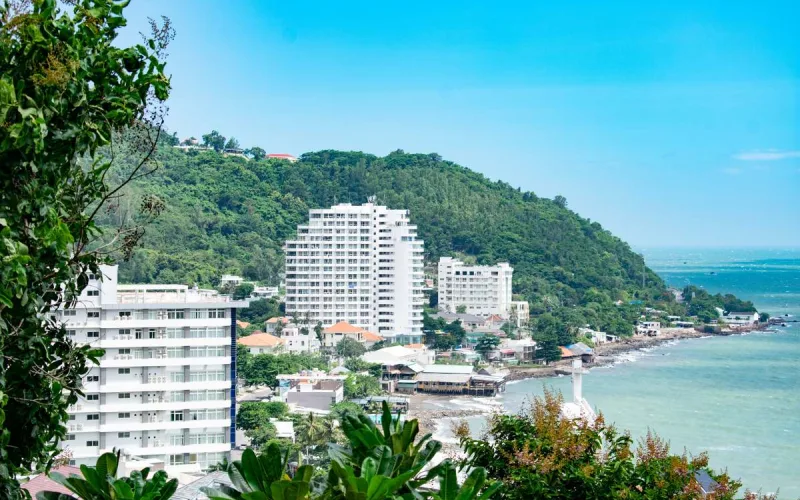
In Phuket and Pattaya, some beach locations are attractive for holidays but inconvenient without transport. A tenant still needs to buy groceries, eat out, move around and solve daily tasks.
Before buying for rental use, the key question is not only how close the beach is. The better question is how easy it is to live in the condo every day.
For a practical rental checklist, use the guide on how to choose a condo for rental demand.
Seasonality and competition near the sea
Beach areas usually have more competition. Popular locations include many condos, apartments, villas, hotels and private listings. In high season, strong units can rent well. In low season, owners often compete on price.
This becomes a problem when the area has many similar units: same studio layouts, similar furniture, similar photos, similar view and similar price. Tenants then choose by reviews, rating, management quality, condition and final cost.
A beachside condo may stay vacant not because the area is weak, but because it does not stand out from nearby offers. In that case, the owner must either reduce the price or improve the product: photos, furnishing, service and management.
Short-term and long-term rental work differently
Short-term rental depends more on seasonality, photos, reviews, response speed and building rules. Long-term rental depends more on daily comfort, monthly price, infrastructure and unit condition.
A beachside condo may work well for short stays and weaker for longer stays. The opposite can also happen: a condo may not achieve a high nightly rate, yet it can rent steadily for several months because the area is practical and the budget is clear.
The rental strategy should be chosen before purchase. Buying for every scenario at once often leads to mistakes in layout, location and budget.
The difference between these models is explained in the guide on short-term and long-term rental.
Management can matter more than the view
Even a strong location can underperform with weak management. Owners need someone to handle listings, showings, check-in, cleaning, repairs, guest communication, bills and unit condition.
Poor management can reduce income quickly. Slow replies, weak cleaning, delayed repairs, unclear deposit rules and photos that do not match reality all lead to weaker reviews. Reviews affect future bookings.
For beachside units, management is especially important because tenant expectations are higher. People pay for the location and expect the service to match.
Which beachside condos usually rent better
The best-performing condos usually combine beach access with a practical living environment. A strong unit has good access to the beach, daily infrastructure nearby, fresh condition, fair entry price, practical layout and professional management.
Simple details matter: comfortable bed, working air conditioning, washing machine, storage, stable internet, good photos, honest description and fast communication.
For rental investment, the buyer should look at tenant behavior. Where do people actually want to stay, how much are they ready to pay, which units get repeat bookings and why do guests leave good reviews?
Checklist before buying a beachside condo for rental
Before buying, check the following:
Real rental prices in the same building and nearby projects.
The difference between high season and low season.
The number of similar units in the area.
Tenant reviews for nearby listings.
Daily comfort without private transport.
Maintenance fees.
Short-term rental rules in the building.
Property management options.
Furniture and repair costs.
Full purchase cost including taxes and transfer expenses.
If the numbers work after these checks, a beachside condo can be a strong asset. If the whole calculation depends on a nice view and optimistic occupancy promises, the risk of disappointment becomes much higher.
Conclusion
A beachside condo in Thailand can rent well when the beach is supported by fair pricing, infrastructure, management and proven demand. The sea attracts attention, then the tenant evaluates comfort, condition and service.
The common mistake is buying the view instead of the rental product. For rental performance, the full living scenario matters: area, access, building, layout, costs, rental rules and management.
If you want to compare properties close to the beach, use the near-beach property collection. For rental investment, calculate the numbers before buying and compare several locations instead of relying only on distance to the beach.