Why a Long Amenity List Does Not Define a Good Condominium
Developers often promote projects through the number of facilities they offer: several swimming pools, coworking spaces, cinema rooms, lounges, saunas, children’s clubs and rooftop gardens. Buyers should focus on whether these facilities are practical and suitable for the total number of residences.
One spacious pool with enough sunbeds may be more useful than several small pools. A compact gym with properly maintained equipment can provide more value than an impressive room with broken machines. A coworking area is useful when it offers reliable internet, comfortable desks, air conditioning and reasonable acoustic privacy.
The same facilities feel very different in a development with 150 units and one with 1,500. When more residents share common areas, crowding, noise, wear and usage restrictions become more likely.
Facilities That Matter to Most Owners
The foundation of a comfortable condominium includes reliable lifts, clean corridors, proper lighting, controlled access, security, CCTV, parking and responsive building management. Full-time residents should also check water supply, waste collection, delivery access and communication with the management office.
In a large building, the number and capacity of lifts can have a major effect on daily convenience. An attractive project quickly becomes frustrating when residents face long waits or frequent lift closures.
Projects with different facility concepts can be compared in our selection of condos for sale in Thailand. Buyers should compare practical value, maintenance quality and recurring ownership expenses.
Swimming Pools, Fitness Centres and Leisure Areas
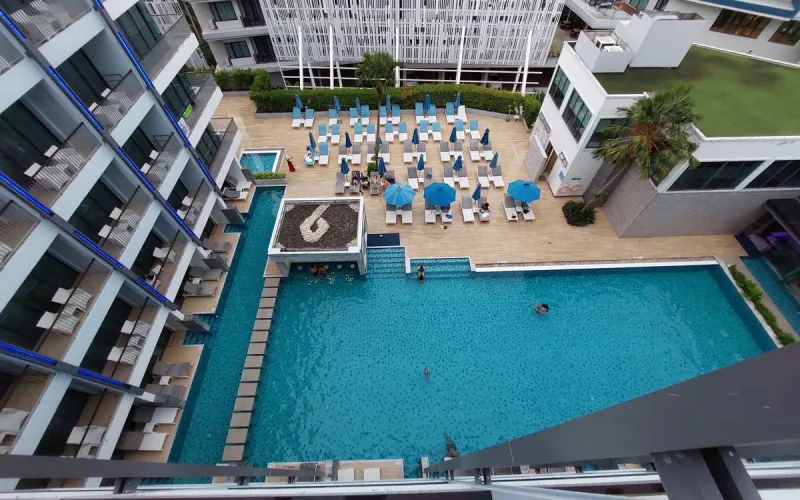
A swimming pool remains one of the most popular condominium facilities in Thailand. During a viewing, check its size, depth, number of sunbeds, shaded areas, opening hours and position relative to residential windows. A pool-facing unit may offer an attractive view while receiving more daytime noise.
Inspect water clarity, tiles, showers, access ladders and the surrounding area. Rust, damaged finishes, cloudy water and permanently closed sections often reveal the actual management standard.
In a fitness centre, ventilation, air conditioning, equipment condition and capacity matter more than decorative design. Cardio machines, free weights and stretching space are sufficient for most residents.
Gardens, walking paths and seating areas can improve everyday living. Their value decreases when the spaces are too small, exposed to intense sun, poorly lit or frequently unavailable.
Amenities for Living, Holidays and Rental Demand
Full-time residents usually prioritise peace, security, parking, reliable lifts, fast internet, green spaces and responsive management. Families may also value playgrounds, indoor playrooms, shallow pool zones and safe pedestrian routes.
Holiday-home buyers often prefer a swimming pool, fitness centre, beach shuttle, reception and assistance with daily services. A shuttle is useful only when it operates on a practical and regular schedule.
Remote workers need stable internet, a proper workspace inside the unit and a quiet common area. Coworking facilities become valuable when they include fast connectivity, enough power outlets and suitable spaces for calls.
For a remote transaction, buyers should request current photographs of shared areas, maintenance rates and facility rules. The complete process is explained in our guide on how to buy property in Thailand remotely.
How Amenities Affect Price and Resale Potential
Well-maintained common areas help a development remain attractive on the resale market. Buyers gain confidence when the pool is clean, lifts operate reliably, landscaping is maintained and management handles problems efficiently.
A large amenity package does not automatically guarantee price growth. Resale potential also depends on location, purchase price, layout, floor, view, unit condition, rental rules and the number of competing listings.
In a large resort development, many similar studios may enter the rental or resale market at the same time. Units with a stronger building position, open view, suitable floor and distance from noisy leisure areas usually compete more effectively.
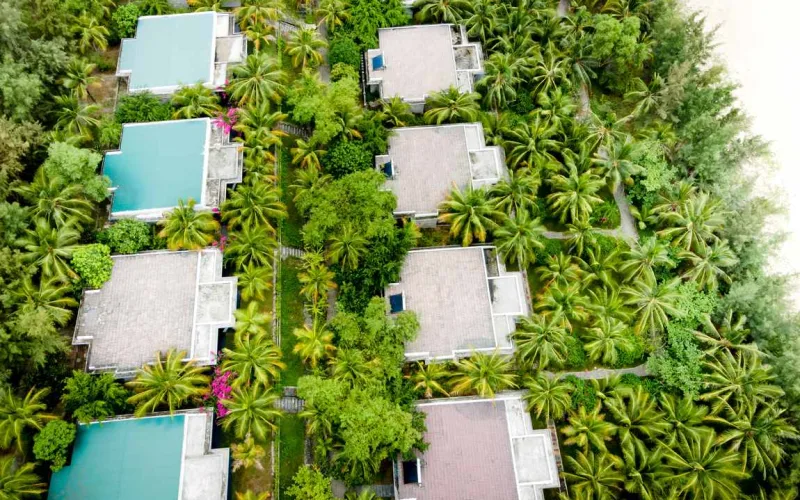
The Phuket property market includes compact condominiums, large resort developments and projects with hotel-style facilities. Each format should be assessed according to the buyer’s goals and ownership costs.
How Much Owners Pay for Shared Facilities
Swimming pools, lifts, gardens, security, reception, fitness rooms and engineering systems are funded through common area maintenance fees. New developments may also charge a separate sinking fund contribution for future major repairs.
The regular fee is commonly linked to the unit size and a rate per square metre. Projects with several pools, air-conditioned common areas, extensive landscaping and a large service team require a higher operating budget.
A very low fee also deserves attention. It may reflect a limited service package or insufficient funding for future maintenance. Buyers should request the current rate, its payment schedule, the sinking fund amount and a clear list of included services.
How to Inspect Condo Facilities Before Buying
Visit the development at different times of day. A daytime inspection shows pool usage, staff activity and the condition of the grounds. An evening visit reveals lighting, noise, parking pressure and access control.
- Check the cleanliness of the lobby, corridors, lifts, washrooms and pool areas.
- Test fitness equipment, lighting, keycard access and intercom systems.
- Look for leaks, mould, rust, cracks and damaged finishes.
- Compare the amount of parking with the number of residences.
- Ask about opening hours and facility rules.
- Confirm which facilities are operational and which remain part of the sales presentation.
- Find out how quickly management responds to maintenance problems.
For an off-plan project, review the master plan, building positions and construction phases. A pool below the windows may create noise, a technical area may affect the view, and a future building may block the outlook from the balcony.
Questions to Ask Before Buying
- What is the current common area maintenance fee?
- Which services are included in the regular payment?
- How much is the sinking fund?
- Are all advertised facilities operational?
- Are there extra charges for parking, coworking, saunas or room bookings?
- Can tenants and guests use all shared facilities?
- What restrictions apply to short-term rentals?
- Who manages the development?
- Are major repairs or fee increases planned?
After ownership registration, the buyer must also inspect the unit, connect utilities and arrange management. The next steps are covered in our guide on what to do after buying property in Thailand.
Strong condominium infrastructure fits the owner’s goals, receives regular use, remains properly maintained and carries reasonable operating costs. This balance supports comfortable living, rental demand and long-term resale appeal.